

Understanding the Risks, Symptoms, and Life-Saving Care for Your Heart’s Inner Lining
As a physician, I often describe the heart not just as a muscle, but as a finely tuned machine. For this machine to work, its internal surfaces must be perfectly smooth. Endocarditis is a condition where that smooth inner lining—the endocardium—becomes the site of a dangerous and often life-threatening infection.
If left untreated, this “silent invader” can permanently damage heart valves and lead to systemic complications. Here is what you need to know to stay protected.
What is Endocarditis?
Endocarditis is the inflammation of the endocardium, the thin, glistening membrane that lines the chambers of your heart and covers the heart valves.
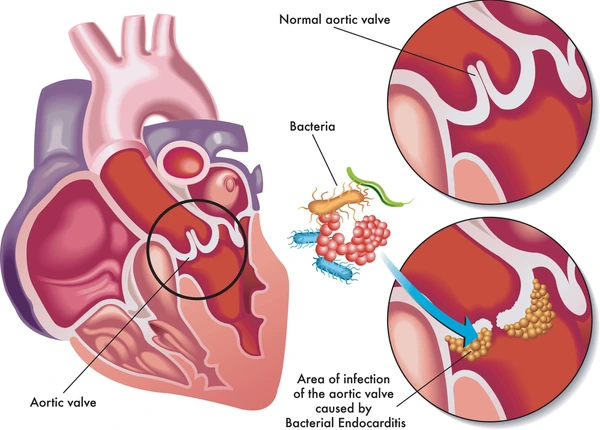
While inflammation can technically have many causes, in the clinical world, “endocarditis” almost always refers to Infective Endocarditis (IE). This happens when germs (usually bacteria) from another part of your body travel through your bloodstream and attach to damaged areas in your heart.
How the Infection Takes Root
The heart is usually very resistant to infection. However, the “perfect storm” for endocarditis occurs when:
- Bloodborne Pathogens: Bacteria enter the bloodstream (via the mouth, skin, or IV sites).
- Turbulent Flow: If a patient has a damaged valve or a congenital heart defect, the blood flow becomes turbulent.
- Vegetation: The bacteria “snag” onto these rough spots, clumping together with platelets and fibrin to form what we call vegetations. These look like small, cauliflower-like growths on the valves that prevent them from closing properly.
More Than Just a Fever
Endocarditis can be “subacute” (developing slowly) or “acute” (hitting suddenly). Because the symptoms can mimic a flu, it is often misdiagnosed early on. Watch for these specific “red flags”:
- Persistent Fever and Chills: Often accompanied by night sweats.
- A New or Changed Heart Murmur: As vegetations grow on the valves, they change the sound of blood flowing through the heart—a key sign I look for during a physical exam.
- Fatigue: A profound sense of exhaustion as the body fights the systemic infection.
- Petechiae: Small, painless red or purple spots on the skin, whites of the eyes, or inside the mouth. These are caused by tiny broken capillaries.
Why Dental Hygiene Matters
You might be surprised to hear a heart doctor talk about your teeth! The mouth is a major gateway for bacteria. Activities like tooth brushing, or more significantly, dental procedures, can allow oral bacteria (like Streptococcus) to enter the blood.
Physician’s Tip: For patients with high-risk heart conditions, we often prescribe “prophylactic” (preventative) antibiotics before dental work to kill these bacteria before they ever reach the heart.
Management and Nursing Care
Treating endocarditis requires a disciplined, long-term approach. It is not a “one-and-done” pill; it often requires weeks of hospitalization.
1. Aggressive Medical Treatment
- Targeted Antibiotics: We identify the specific bacteria via blood cultures and administer high-dose antibiotics intravenously (IV), usually for 4 to 6 weeks.
- Surgical Intervention: In severe cases where the valve is destroyed or the infection is too “stubborn,” a surgeon may need to repair or replace the heart valve.
2. Essential Nursing Care
Nurses are the frontline defenders in endocarditis recovery. Their role includes:
- Heart Failure Monitoring: Assessing for shortness of breath, swelling in the legs (edema), or lung crackles—signs that the heart is struggling to pump.
- IV Site Management: Since treatment is long-term, maintaining a clean and functional IV or PICC line is critical to prevent secondary infections.
- Education: Teaching patients the importance of completing the full course of antibiotics and the vital link between dental hygiene and heart health.
Endocarditis is a serious condition, but with modern diagnostics and potent antibiotics, the prognosis is much better than it was in the past. If you have a known heart valve issue and experience a lingering fever or unusual skin spots, don’t wait.