

Chronic Obstructive Pulmonary Disease (COPD) is more than just a “smoker’s cough.” It is a progressive, irreversible lung condition that makes it increasingly difficult to breathe. Globally, it remains one of the leading causes of chronic illness, yet with the right knowledge, it can be managed effectively.
In this post, we’ll break down the essentials of COPD—from what causes it to how it affects the body—to help you or your loved ones breathe a little easier.
What Exactly is COPD?
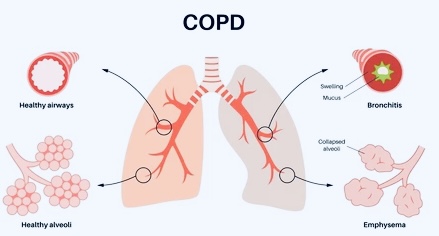
COPD is an umbrella term used to describe progressive lung diseases. It primarily consists of two main conditions that often occur together:
- Chronic Bronchitis: Constant inflammation and excess mucus production in the bronchial tubes.
- Emphysema: Damage to the tiny air sacs (alveoli) in the lungs, which reduces the amount of oxygen reaching the blood.
Unlike asthma, which is often reversible, the airflow obstruction in COPD is permanent and worsens over time.
What Causes COPD?
While smoking is the most well-known culprit, it isn’t the only cause. Understanding the triggers can help in prevention and management:
- Tobacco Smoke: The primary cause, including long-term exposure to secondhand smoke.
- Environmental Pollutants: Long-term exposure to air pollution, fumes, or irritants.
- Occupational Hazards: Frequent contact with industrial dust, chemicals, or vapors.
- Genetics: A rare genetic condition called Alpha-1 Antitrypsin (AAT) deficiency can cause COPD even in non-smokers.
The Pathophysiology: What’s Happening Inside?
COPD changes the physical structure of your lungs. This process usually involves:
- Airway Narrowing: Chronic inflammation causes the walls of the airways to thicken and swell.
- Mucus Hypersecretion: The body produces thick mucus to trap irritants, but in COPD, this mucus blocks the already narrowed airways.
- Loss of Elasticity: The lungs lose their “springiness,” making it hard to push air out, leading to air being trapped in the lungs.
Recognizing the Symptoms
Symptoms often don’t appear until significant lung damage has occurred. Watch for these key signs:
| Symptom | Description |
| Chronic Cough | Often called a “smoker’s cough,” usually producing significant mucus. |
| Wheezing | A whistling sound when breathing, caused by narrowed airways. |
| Chest Tightness | A feeling of pressure or weight on the chest. |
| Barrel Chest | In advanced stages, the chest may look rounded or “puffed out” due to air trapping. |
| Cyanosis | A bluish tint to the lips or fingernails, indicating low oxygen levels (late stage). |
Living with COPD
While there is no cure, treatment focuses on relieving symptoms and slowing the disease’s progression. Management usually includes smoking cessation, bronchodilators, pulmonary rehabilitation, and, in some cases, supplemental oxygen.
Nursing Tip: If you notice a sudden increase in breathlessness or a change in the color of your mucus, contact your healthcare provider immediately, as this may indicate an “exacerbation” or flare-up.