

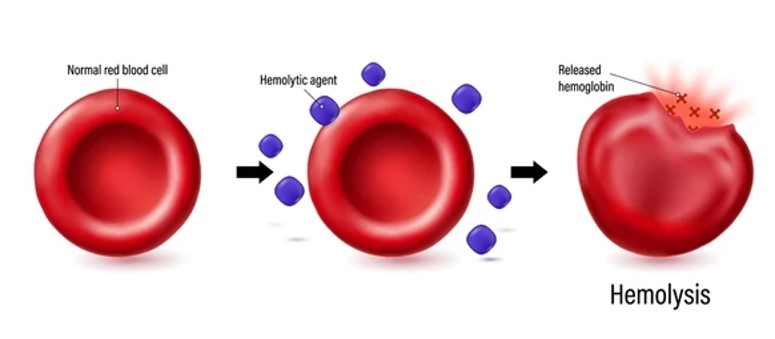
Anemia is a broad diagnosis, but Hemolytic Anemia is a specific beast. It occurs when your red blood cells (RBCs) are destroyed faster than your bone marrow can replace them.
Because there are so many underlying causes—ranging from genetics to mechanical trauma—keeping them straight is a challenge. That’s where our favorite (and admittedly memorable) mnemonic comes in: SHEEP TIT.
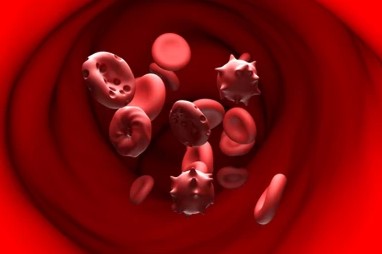
What is Hemolysis?
Normally, a red blood cell lives for about 120 days. In hemolytic anemia, that lifespan is cut short. This leads to a spike in bilirubin (causing jaundice), an increase in reticulocytes (baby RBCs), and a drop in overall oxygen-carrying capacity.
The SHEEP TIT Mnemonic Breakdown
| Letter | Condition | The “Fast Facts” |
| S | Sickle Cell Anemia | A genetic mutation causing RBCs to become rigid and “sickle-shaped,” leading to blockages. |
| H | Hereditary Spherocytosis | A defect in the RBC membrane proteins makes cells spherical and fragile. |
| E | Enzyme Deficiencies | G6PD deficiency (triggered by fava beans or stress) and Pyruvate Kinase deficiency. |
| E | Erythroblastosis Fetalis | Also known as Rh incompatibility between a mother and her fetus. |
| P | Paroxysmal Nocturnal Hemoglobinuria (PNH) | A rare, acquired stem cell disorder that causes RBCs to break down at night. |
| T | Trauma to RBCs | Mechanical destruction, often from artificial heart valves or “Microangiopathic” issues (MAHA). |
| I | Immunohemolytics | Your immune system attacks your own cells (Warm Antibody or Cold Agglutinin disease). |
| T | Thalassemias | Genetic defects in alpha or beta globin chain synthesis, common in Mediterranean/Asian descent. |
Intrinsic vs. Extrinsic how to Categorize Them
While the mnemonic helps you list the types, exams often ask you to categorize them by where the problem starts:
- Intrinsic (The cell is born “wrong”): This includes Sickle Cell, Hereditary Spherocytosis, Enzyme deficiencies, PNH, and Thalassemias.
- Extrinsic (The cell is “attacked”): This includes Erythroblastosis Fetalis, Trauma, and Immunohemolytics.
Common Symptoms to Watch For
If you’re seeing a patient (or studying a case study) with these symptoms, think hemolysis:
- Jaundice: Yellowing of the skin and eyes due to high bilirubin.
- Dark Urine: Often described as “tea-colored” or “cola-colored.”
- Splenomegaly: An enlarged spleen because it’s working overtime to filter out the “garbage” cells.
- Fatigue & Paleness: The classic signs of any anemia.
Hemolytic anemia is a complex puzzle, but the SHEEP TIT mnemonic ensures you never miss a piece. Whether it’s a genetic error in a globin chain or a rogue immune system, you now have the roadmap to identify the culprit.