

A Physician’s Guide to the Most Comprehensive Form of Uveitis
As an ophthalmologist, I often tell my patients that the eye is like a camera. For a camera to work, every lens and sensor must be clear. Panuveitis is a serious medical condition where the entire “internal lining” of that camera becomes inflamed.
Unlike more common eye issues, panuveitis is a medical priority that requires aggressive management to prevent permanent vision loss.
What Exactly is Panuveitis?
To understand panuveitis, we first have to look at the uvea. The uvea is the middle, vascular layer of the eye that contains most of the blood vessels. It is made up of three parts:
- The Iris: The colored part of the eye.
- The Ciliary Body: The structure behind the iris that helps focus the lens.
- The Choroid: The layer between the retina and the white of the eye (sclera) that supplies blood.
While some patients only have inflammation in the front (Anterior Uveitis) or back (Posterior Uveitis), Panuveitis occurs when all three layers of the uvea are inflamed simultaneously. This widespread inflammation makes it particularly challenging.
The Mechanism: How It Damages the Eye
Panuveitis doesn’t just stay within the uveal tract. Because the inflammation is so widespread, it creates a “domino effect” that can damage other vital structures critical for vision:
- The Lens: Chronic inflammation can lead to rapid-onset cataracts, clouding your vision.
- The Retina: Swelling (edema) in the retina can cause distorted vision or “blind spots.”
- The Optic Nerve: Increased pressure or direct inflammation can damage the nerve that sends signals to your brain, potentially leading to glaucoma or permanent vision loss.
Signs and Symptoms to Watch For
Panuveitis usually presents with a “heavy” or “deep” set of symptoms. If you experience the following, you should seek an urgent ophthalmic evaluation:
- Blurred Vision: A sudden or gradual “fog” over your sight, which may worsen.
- Eye Pain: Often described as a deep, aching sensation that gets worse when focusing or with eye movement.
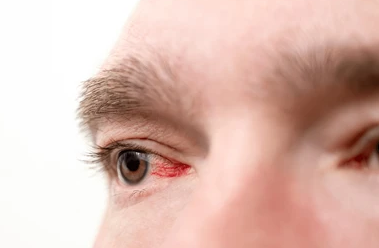
- Redness: The white of the eye may appear significantly bloodshot or dusky.
- Floaters: Seeing numerous dark spots or “cobwebs” drifting across your field of vision, more than usual.
- Sensitivity to Light (Photophobia): Difficulty looking at bright lights or sunlight.
Management and Nursing Care
Treating panuveitis is a marathon, not a sprint. Because it involves the entire eye, we must use a multi-faceted approach to “calm the storm” and preserve your vision.
1. Medical Intervention
We primarily use two types of medications:
- Corticosteroids: These are often the first line of defense to quickly reduce severe inflammation. They may be given as eye drops, injections around or into the eye, or systemic (oral) pills, depending on the severity.
- Immunosuppressive Therapy: If the inflammation is chronic, recurrent, or caused by an autoimmune disease, we may use advanced medications to “retrain” the immune system and prevent further damage. These are often crucial for long-term control.
2. Clinical Nursing Care
Proper nursing care and diligent patient adherence are the backbone of successful recovery. Key aspects include:
- Vision Monitoring: Frequent, meticulous checks of visual acuity and intraocular pressure to ensure the treatment is effective and to catch any complications early.
- Medication Education: Ensuring patients understand the strict schedule and potential side effects of medications, especially for steroids to avoid “rebound” inflammation or other systemic issues.
- Symptom Tracking: Close monitoring for any worsening symptoms, new signs, or development of secondary complications like increased eye pressure (glaucoma) or cataracts.
The Bottom Line
Panuveitis is a complex condition that often points to an underlying systemic issue, such as sarcoidosis, lupus, Behçet’s disease, or certain infections. However, with early diagnosis, aggressive and sustained treatment, and a dedicated care team, we can manage the inflammation, prevent severe complications, and protect your precious sight.