

Think of your immune system as a highly trained, elite security force. While your skin acts as the perimeter fence, your White Blood Cells (WBCs), or leukocytes, are the active-duty soldiers patrolling your bloodstream. With a normal count ranging between 4,000 and 11,000 per microliter (µL), these cells are constantly on the lookout for trouble.
When that count shifts, or when specific “units” of the force are mobilized, it tells a story about what’s happening inside your body. Here is a breakdown of your internal defense team.
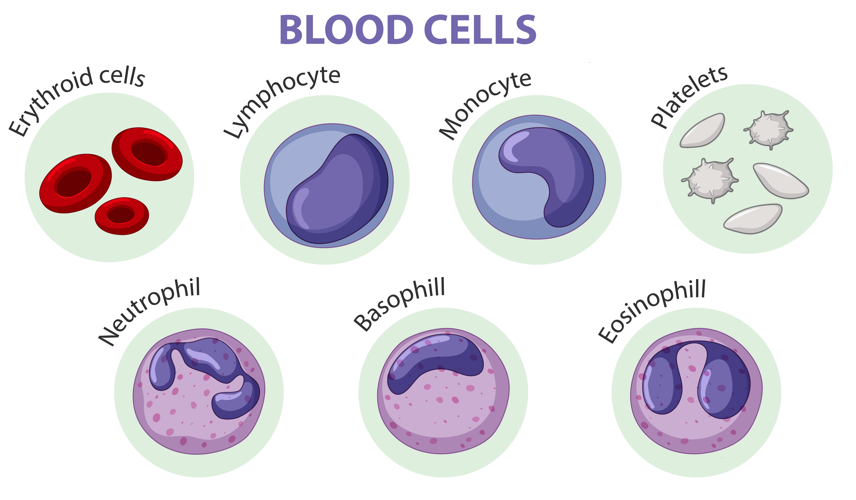
Neutrophils: The First Responders
Population: 50–70% (The majority of your WBCs)
Neutrophils are the “infantry” of the immune system. They are usually the first to arrive at the scene of an injury or infection.
- Specialty: Killing bacteria and fungi.
- The Mission: During acute bacterial infections, neutrophils hunt down pathogens and neutralize them. If you’ve ever seen pus in a small wound, you’re looking at a battlefield where neutrophils have fought and died to keep you safe.
Lymphocytes: The Special Ops & Intelligence
Population: 20–40%
Lymphocytes are the “brains” of the operation, providing targeted, long-term immunity. They are divided into three elite squads:
- B Cells: The weapons factory. They produce antibodies—specific proteins that tag and disable invaders.+1
- T Cells: The commanders of cell-mediated immunity. They coordinate the attack and kill infected cells directly.
- NK (Natural Killer) Cells: These cells specialize in “search and destroy” missions against viruses and cancer cells.
Monocytes: The Heavy Lifters
Population: 2–8%
If the neutrophils are the scouts, monocytes are the clean-up crew and reinforcements.
- The Transformation: When they leave the blood and enter tissues, they become macrophages.
- The Mission: Through a process called phagocytosis, they “eat” cellular debris and pathogens. They are the primary defense during chronic infections, staying on the scene long after the first responders have finished.
Eosinophils: The Specialist Unit
Population: 1–4%
Eosinophils have a very specific set of skills. You’ll see their numbers rise in two main scenarios:
- Parasitic Battles: They are the primary defense against larger parasites (like worms) that are too big for other cells to eat.
- Allergy Management: They play a major role in asthma and allergic reactions, helping to control inflammation so the body doesn’t overreact to environmental triggers.
Basophils: The Alarm System
Population: 0–1%
Though they are the rarest type of WBC, basophils are incredibly powerful. They are responsible for the body’s “emergency broadcast” during an attack.
- Chemical Release: They secrete histamine (which causes blood vessels to leak and dilate) and heparin (which prevents blood from clotting too quickly).
- The Mission: This process—vasodilation and permeability—allows other immune cells to reach the site of infection faster. However, in extreme cases, this leads to anaphylaxis or severe allergic reactions.
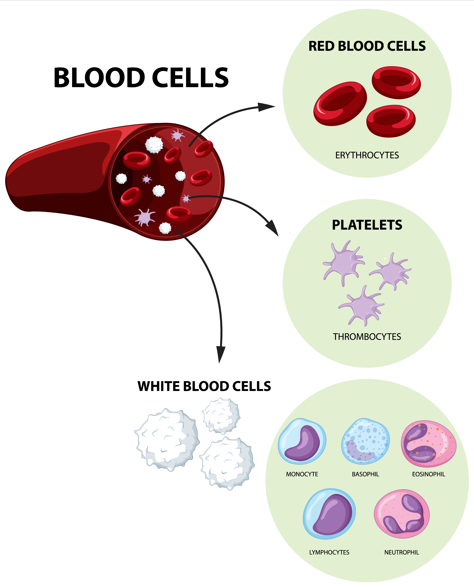
Summary Table: The WBC Cheat Sheet
| Cell Type | % of Total | Primary Role | Key Association |
| Neutrophil | 50-70% | Kills bacteria/fungi | Acute Infection |
| Lymphocyte | 20-40% | Antibodies & Viral defense | Viruses / Immunity |
| Monocyte | 2-8% | Phagocytosis (cleaning) | Chronic Infection |
| Eosinophil | 1-4% | Parasite & Allergy defense | Asthma / Parasites |
| Basophil | 0-1% | Histamine release | Anaphylaxis |
Note: Maintaining a healthy lifestyle supports these “soldiers,” but if you notice significant fatigue or frequent infections, a Complete Blood Count (CBC) test can help determine if your cellular army is at its full strength.